2026-04-01 - 6 min
Reply(x) vs Manual Replying: Time and Results Comparison
A transparent comparison of using Reply(x) versus manual replying on X, covering time investment, consistency, and real growth outcomes.
Key takeaways
- Manual replying on X works. Plenty of successful accounts grew entirely through organic, unassisted engagement. The question is not whether manual replying is effective, but whether it is sustainable at the pace most founders need.
- The core time cost of manual replying is not writing. It is finding the right conversations. Scrolling through feeds, evaluating threads, and deciding which posts deserve your attention consumes 60 to 70 percent of the total session time. The actual reply writing takes minutes.
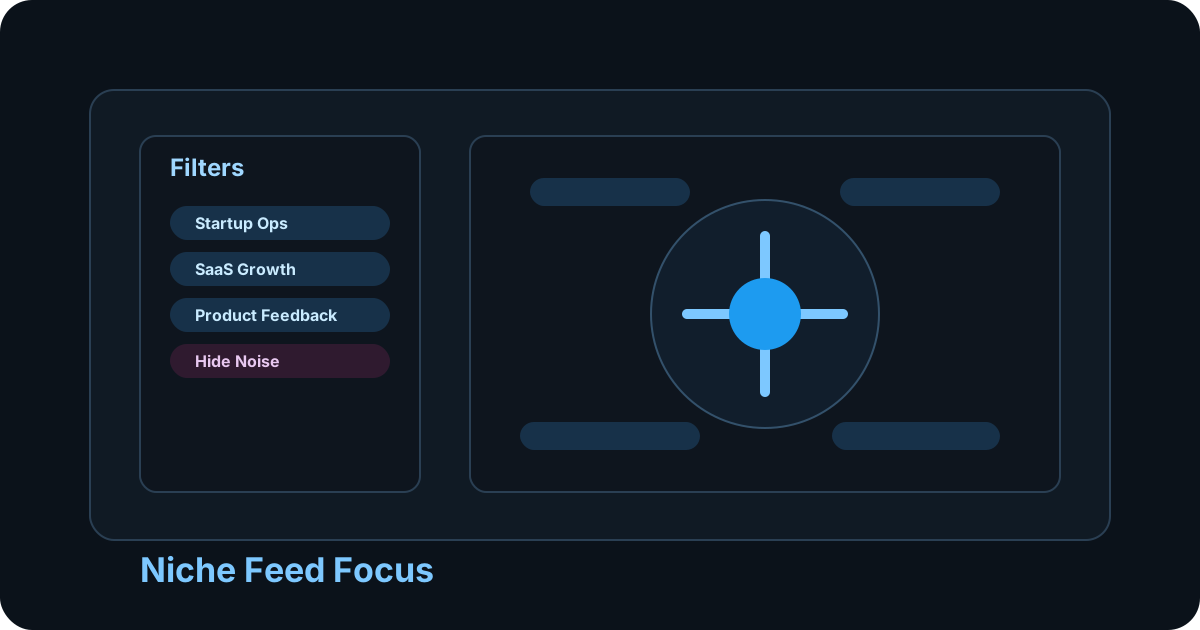
- Reply(x) compresses the discovery phase. By filtering posts by relevance, topic, and engagement signals, it surfaces a curated set of opportunities so you can skip the scrolling and start writing immediately. This typically reduces total session time by 40 to 50 percent.
Why this matters
Manual replying on X works. Plenty of successful accounts grew entirely through organic, unassisted engagement. The question is not whether manual replying is effective, but whether it is sustainable at the pace most founders need.
The core time cost of manual replying is not writing. It is finding the right conversations. Scrolling through feeds, evaluating threads, and deciding which posts deserve your attention consumes 60 to 70 percent of the total session time. The actual reply writing takes minutes.
Execution playbook
Reply(x) compresses the discovery phase. By filtering posts by relevance, topic, and engagement signals, it surfaces a curated set of opportunities so you can skip the scrolling and start writing immediately. This typically reduces total session time by 40 to 50 percent.
Consistency is where manual approaches usually fail. Founders get busy with product, fundraising, or customer work, and replying drops off the schedule. A structured tool with sessions, timers, and daily challenges helps maintain rhythm even during demanding weeks.
Quality control is another difference. When replying manually at volume, it is easy to slip into low-effort patterns because there is no feedback mechanism. Reply(x) provides tone matching and draft suggestions that keep quality stable even when your energy is low.
The semi-automated approach in Reply(x) does not replace your voice. Every reply goes through you before publishing. You approve, edit, or discard each suggestion. The tool accelerates drafting, but final judgment stays human.
In terms of results, users who reply consistently for 30 minutes per day through Reply(x) typically see 2 to 3 times more profile visits per week than users who reply manually for the same duration. The difference comes from better post selection, not faster typing.
What to apply this week
Manual replying has one clear advantage: serendipity. Unstructured browsing sometimes leads to unexpected conversations and connections that a filtered feed might miss. The trade-off is that these discoveries come at a high time cost.
The practical recommendation is to use Reply(x) for your structured daily sessions and keep a few minutes of manual browsing for exploration. This hybrid approach captures the efficiency of the tool while preserving the organic discovery that makes X valuable.