2026-03-07 • 5 min
Build a Niche Feed That Removes Noise and Improves Focus
How to design a focused X feed so your daily replies target the right conversations and compound faster.
Key takeaways
- Most growth problems on X start with poor input quality. If your feed is random, your replies become random too.
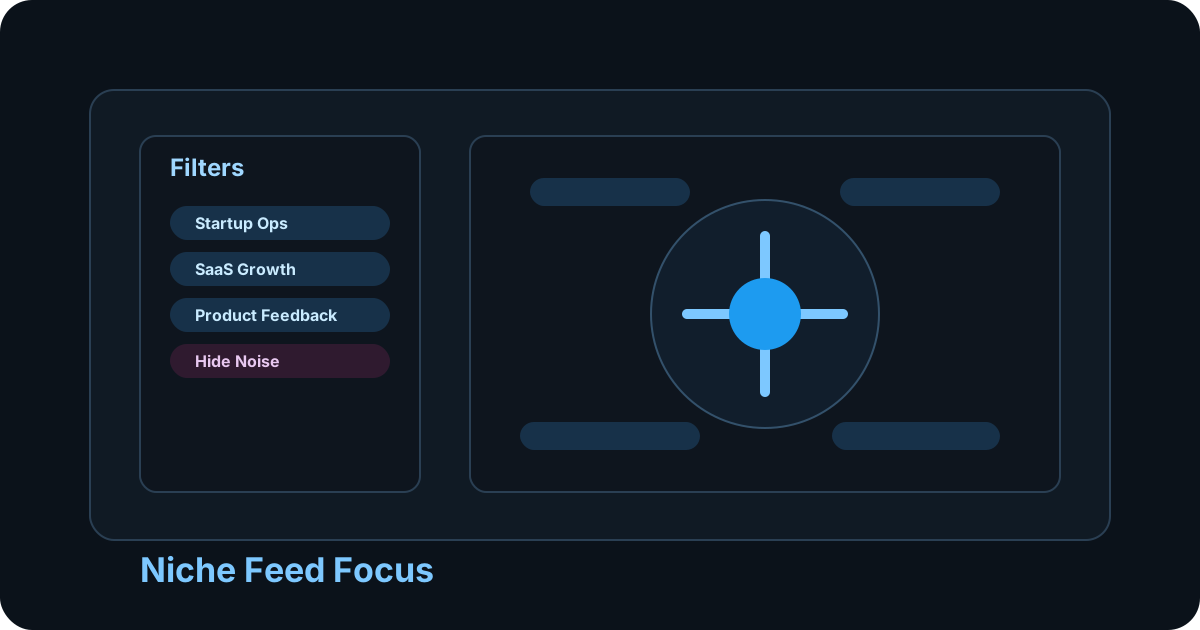
- Start with topic filters that map to your positioning. For example, a B2B SaaS founder can prioritize startup operations, distribution, and product feedback while hiding everything unrelated.
- A cleaner feed reduces decision fatigue. Instead of choosing from 300 noisy posts, you pick from a tight list of relevant opportunities and execute faster.
Why this matters
Most growth problems on X start with poor input quality. If your feed is random, your replies become random too.
Start with topic filters that map to your positioning. For example, a B2B SaaS founder can prioritize startup operations, distribution, and product feedback while hiding everything unrelated.
Execution playbook
A cleaner feed reduces decision fatigue. Instead of choosing from 300 noisy posts, you pick from a tight list of relevant opportunities and execute faster.
Better inputs produce better replies, and better replies produce better followers. Feed quality is a growth multiplier.
Begin with a strict inclusion list. Define topics that directly connect to your offer, audience, and expertise. This list gives you a fast yes or no decision for every potential thread.
Then define an exclusion list. Remove recurring noise categories that consume attention but rarely create useful conversations for your niche. Cutting noise is often more impactful than adding new sources.
Use engagement thresholds carefully. High engagement posts can drive visibility, but extremely viral threads are often saturated. Mid-range posts with active discussion can produce better reply-level signal.
What to apply this week
Review your feed composition weekly. If more than half of surfaced posts are irrelevant, your filters are too broad. Tightening criteria improves both speed and confidence when selecting reply opportunities.
A focused feed also improves learning velocity. Because conversations are aligned, patterns become obvious faster, and your reply quality improves through repetition in a coherent context.