Back to blog

2026-03-05 • 6 min

Semi-Automation vs Full Automation on X: What Is Actually Safer?

A clear breakdown of risk, control, and long-term account safety when scaling your reply workflow.
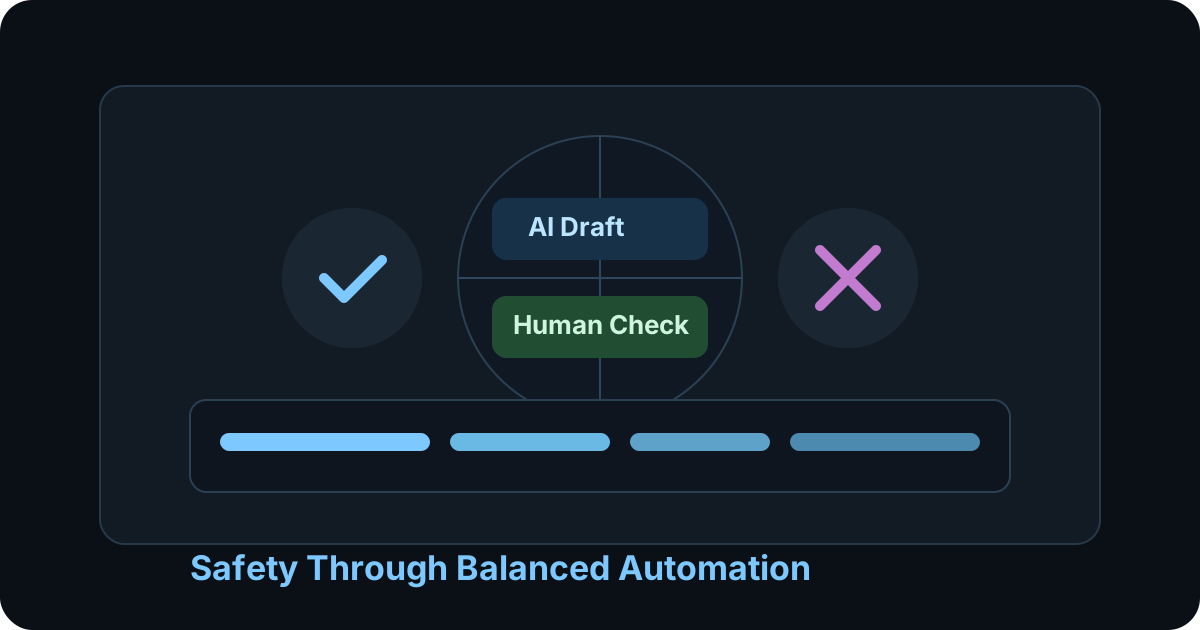
Balance between automated drafting and human review for safer replies
Safety Automation Workflow

Key takeaways

  • Full automation sounds efficient until it starts publishing weak replies at scale. That is where quality drops, engagement declines, and platform risk increases.
  • Semi-automation keeps the high-leverage parts automated, like discovery and drafting, while leaving final publishing decisions to the user. You keep speed without losing judgment.
  • The safest workflow is human-in-the-loop with clear guardrails: tone presets, relevance checks, and one-click final approval. This reduces accidental spam patterns.

Why this matters

Full automation sounds efficient until it starts publishing weak replies at scale. That is where quality drops, engagement declines, and platform risk increases.

Semi-automation keeps the high-leverage parts automated, like discovery and drafting, while leaving final publishing decisions to the user. You keep speed without losing judgment.

Execution playbook

The safest workflow is human-in-the-loop with clear guardrails: tone presets, relevance checks, and one-click final approval. This reduces accidental spam patterns.

If your long-term goal is durable audience trust, semi-automation wins. It aligns with both platform behavior and content quality.

Full automation usually fails on nuance. It cannot reliably detect context shifts, sarcasm, or sensitive timing around specific conversations. A human reviewer catches those risks before publishing.

Semi-automation is stronger because it separates drafting from decision making. Machines can accelerate the repetitive part, while humans keep editorial control over tone, claim strength, and strategic fit.

Risk management should be explicit. Create disallowed topic lists, banned phrases, and maximum posting thresholds. These safeguards prevent overproduction patterns that look unnatural to platforms and users.

What to apply this week

Measure safety with two indicators: deletion rate and correction rate. If you often delete or edit published replies, your workflow is moving too fast for your current quality controls.

At scale, the best systems are not the fastest systems. They are systems that stay reliable for months without damaging trust, which is why semi-automation remains the pragmatic long-term approach.